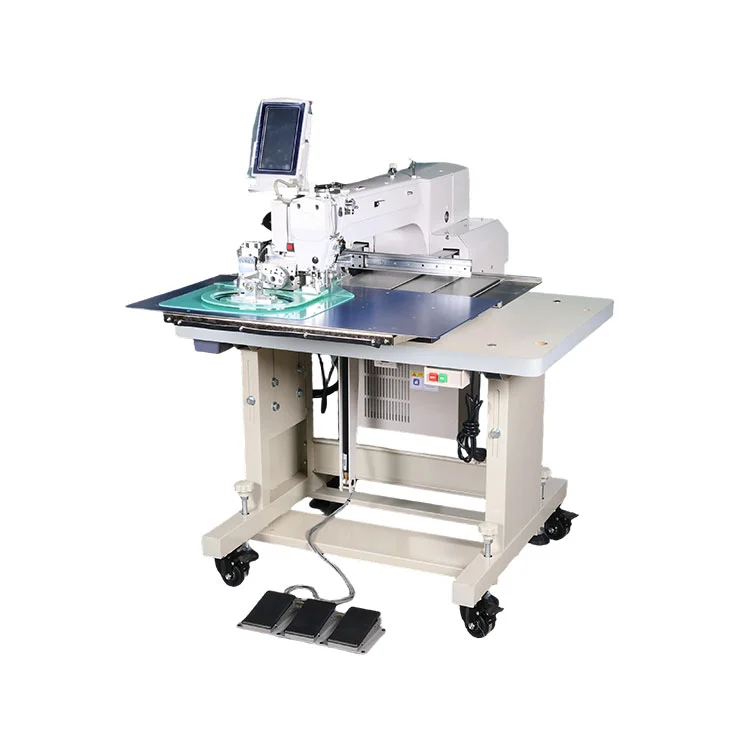
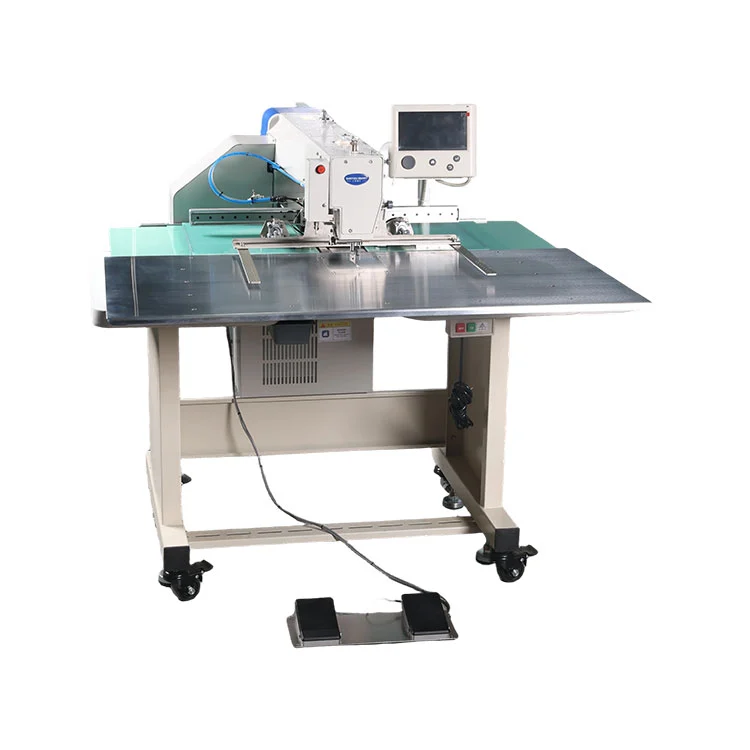
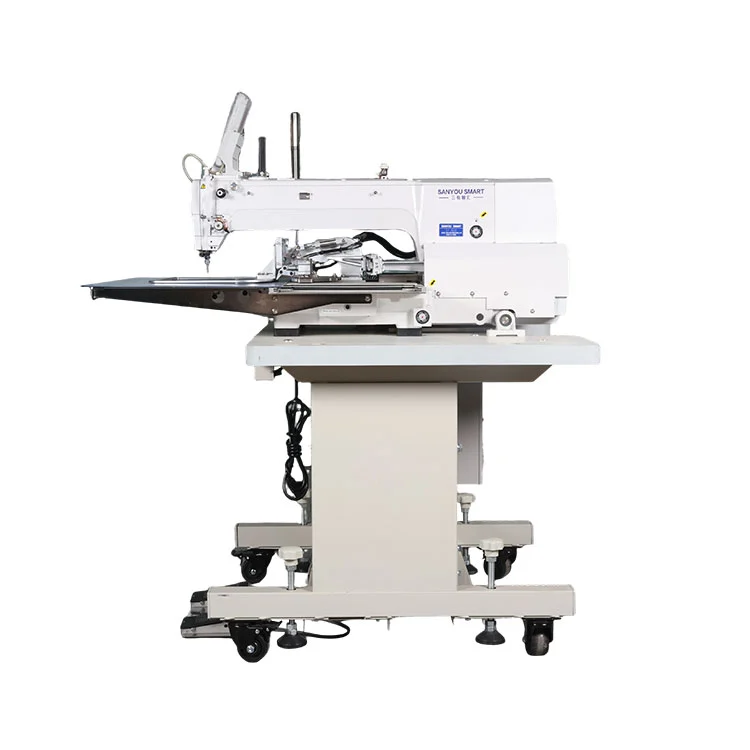
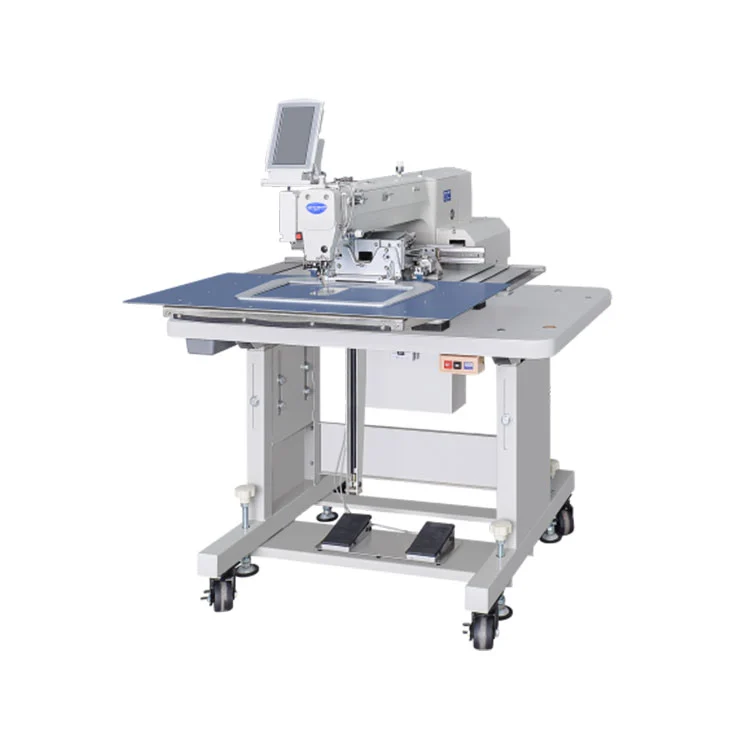
Sanyou is a sewing machine supplier from China, with over a decade of experience in the industry. Leveraging our expertise, we provide advanced and reliable products to global buyers. Because of our extensive experience and professionalism, we have the capability to customize sewing equipment and provide upgrades and modifications to help you improve your production efficiency.
A sewing machine uses needles, threads, and mechanical and electronic systems to sew, overcast, decorate, or reinforce fabrics, leather, and composite materials. It refers not to the simple sewing machines commonly used at home, but to equipment capable of meeting your industrial production needs.
In modern manufacturing, sewing machines have evolved from traditional foot-operated devices to industrial automation equipment integrating electronic control systems, automatic feeding, programmed sewing, and high-precision drives.
For industries such as clothing, footwear, bags, automotive interiors, pet supplies, and sporting goods, industrial-grade sewing equipment is one of the core production machines.
Is the task of a sewing machine simply to sew two pieces of fabric together? Not at all. The sewing equipment provided by Sanyou is reliable and highly automated, capable of performing many tasks in production.
This is the core capability of a sewing machine, determining whether the product is strong and durable.
Main functions include:
Straight stitch, curved stitch, backstitch, overlock stitch
Sewing of multi-layer materials (fabric / leather / composite materials / sponge / mesh, etc.)
Reinforcement stitching for high-stress areas
In actual sewing production, the quality of the stitching directly determines whether the product structure is stable and sufficiently durable.
Modern industrial sewing machines utilize extensive application control and trajectory stitching to complete processes that are difficult to achieve consistently with traditional manual methods.
Common applications:
Automatic sewing of complex pattern trajectories
Precise replication of circular, irregular, and repetitive patterns
Sewing of logos, labels, decorative lines, and functional lines
Highly consistent decorative stitches and positioning stitches
When your factory is in production, these capabilities can help you improve the appearance of your products, ensure high consistency in mass-produced products, and are one of the foundations for supporting brand customers' design implementation.
To better facilitate mass production and ensure high consistency in finished products, it's time to shift the reliance on skilled workers to equipment and systems.
Sanyou's advanced equipment can achieve:
Automatic feeding, automatic pressing, automatic thread cutting
Continuous operation after program setting
Repetitive processing of fixed trajectories
Multi-process integration (sewing + positioning + fixing)
The direct result of automation is a significant increase in production efficiency, faster onboarding for new workers, and a substantial reduction in human error, leading to better standardized delivery.
Compared to traditional single-function equipment, modern sewing machines increasingly emphasize adjustability and customizability.
Including:
Switching between different sewing ranges (small items / large items)
Adaptability to various materials
Rapid switching of different product trajectories
Customized fixtures, workbenches, and systems based on process requirements
Our sewing machines meet these requirements and can widely serve:
Multi-category factories
Sampling and small-batch orders
OEM/ODM customers
Non-standard sewing processes
Maintenance is crucial for any equipment. SanYou provides you with a maintenance guide for your sewing machine. For any other operational issues, please feel free to contact us for technical support.
● Before starting the machine and after finishing get off work each day, promptly clean the needle plate, rotary hook, feed mechanism, and work area of lint and dust.
● Regularly check the wear of the needle, presser foot, and thread tension device. Replace them immediately if they are deformed or blunted.
● Lubricate key moving parts according to specifications to reduce abnormal noise and component wear caused by dry friction.
● During operation, observe the equipment for any abnormal vibrations or sounds. If any are detected, it may indicate a potential malfunction.
● Based on actual usage frequency, regularly perform a more comprehensive internal cleaning of the equipment, focusing on the transmission system and key structural parts.
● Regularly check the working condition of the feeding system, needle bar mechanism, and rotary hook components.
● Inspect and preemptively replace wear parts such as belts and bearings to effectively reduce the risk of unexpected downtime.
● Pay attention to checking the stability of the electrical control system and wiring connections to avoid operational abnormalities caused by poor contact.
● For sewing machines equipped with control systems, keep the inside of the electrical control box dry and clean to prevent dust, moisture, and static electricity from damaging electronic components.
● It is recommended to regularly back up sewing programs and parameter settings to prevent data loss due to system abnormalities or incorrect operation.
● Periodically calibrate sensors, actuators, and positioning systems.
● When the equipment operating environment or processing technology changes, the system parameters should be adjusted accordingly.